
Durban Port Delays Hit 20 Days: What Carriers Are Telling Shippers Right Now
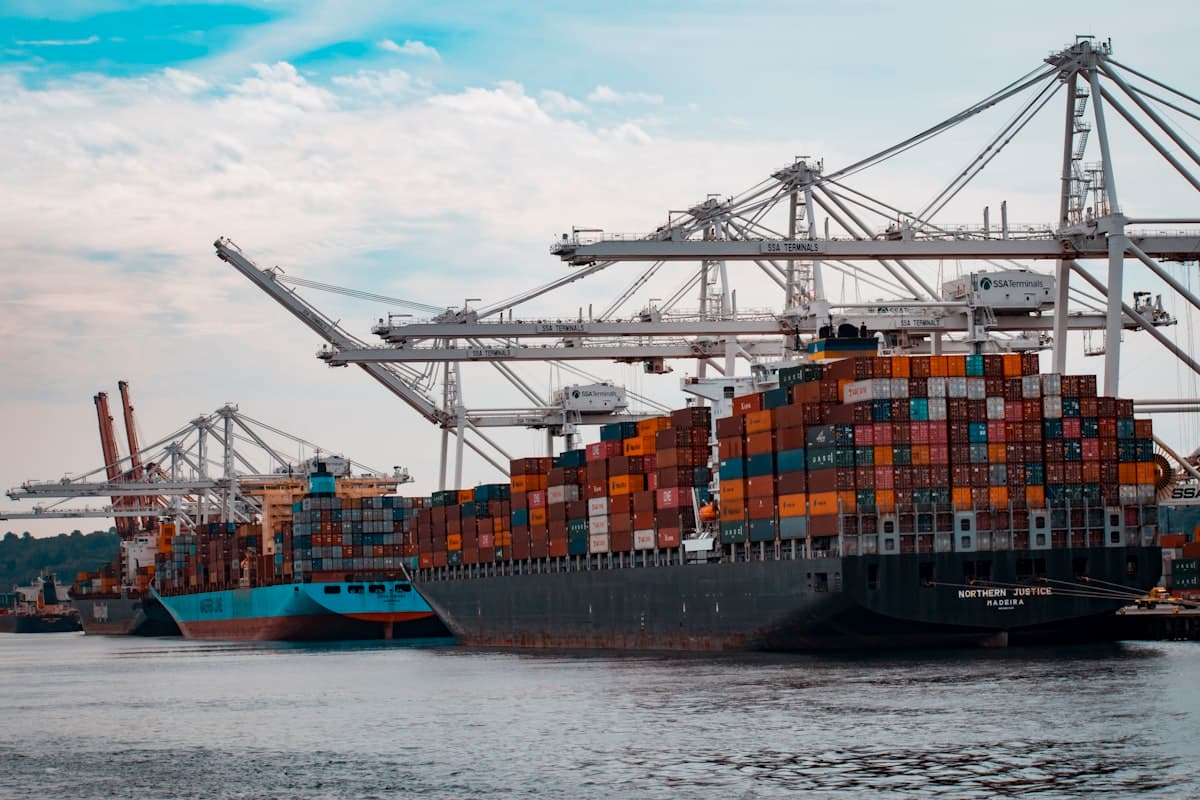
Carriers are no longer speaking in estimates. The guidance now being issued to customers serving Durban Gateway Terminal is explicit: expect delays of up to 20 days.
That number, reported by The Loadstar on 25 August, reflects a deterioration from the 8-to-12-day window that Maersk quoted just days earlier. It is not a forecast for some future point. It is the current operating reality for vessels attempting to call at South Africa's busiest container terminal.
The week ending 16 August told the story in raw numbers. DGT handled 25,793 TEUs, a 26% decline from the previous week. Throughput reached 66% of the terminal's target. Vessels spent an average of 66 hours at anchorage and 70 hours at berth. By 19 August, 10 container vessels were waiting outside the port — seven for DGT, two for Pier 1, and one for the Point terminal.
Those numbers have not improved. If anything, the trajectory is worsening.
The System Migration That Broke the Terminal
The immediate trigger was the Navis N4 terminal operating system cutover on 15 August. DGT suspended landside operations at 18:00 that evening, with the migration expected to take roughly 12 hours. It did not go smoothly.
The South African Association of Freight Forwarders told the Presidency that the transition to DGT's independent Navis N4 platform coincided with wider operational constraints — booking availability, yard and stack fluidity, equipment reliability, landside evacuation, and coordination across the terminal interface. Stack occupancy was nearing 85%. Fluidity inside the yard was severely constrained.
DGT told SAAFF that operations resumed at roughly 70% of standard operating norms, with appointment slots being released in a controlled manner while the system stabilised. A 24/7 Hypercare support structure was established. Priority handling was given to reefers and urgent moves.
That controlled release is one of the mechanisms determining how quickly containers can leave the terminal. It is also one of the reasons the backlog has not cleared.
What Is Happening Inside the Terminal
Containers discharged on 11 August are still sitting inside the terminal on 25 August. That is a 14-day gap between discharge and availability for collection. During that gap, the discharge-based charging clocks on carrier demurrage tariffs are running.
Terminal storage is a separate charge with its own free-time rules. DGT has waived storage charges for containers currently inside the terminal and suspended them until operational stability is restored. The company has also appealed to shipping lines to consider additional free time and demurrage relief.
But the waiver does not apply uniformly, and the appeal to carriers is exactly that — an appeal. Cargo owners facing demurrage invoices from carriers whose tariffs calculate from discharge have limited recourse unless the carrier agrees to waive or extend.
The Competition Commission complaint filed in July by road hauliers names eight carriers — MSC, Maersk South Africa, CMA CGM, Hapag-Lloyd, ONE, COSCO, Pacific International Lines, and Evergreen — alongside DGT and Transnet, over allegedly excessive storage charges and anti-competitive practices. MSC has disputed the allegations. No regulatory finding has been made.
The Landside Bottleneck
The terminal is not the only constraint. Trucks are waiting 30 hours or more for booked appointments. Bayhead Road transit times have increased steadily since January. The time transporters spend in the port precinct per visit has risen by more than half in three months.
DGT has responded by reverting truck appointment slots to a 24-hour release window, with allocations reviewed every four hours. All available slots are being released to the maximum extent operationally possible. But maximum extent, when yard density remains challenging and equipment availability is constrained, is still not enough.
Rail evacuation, which should be one of the levers for clearing the backlog, is itself constrained. A mainline maintenance shutdown runs from 25 August to 2 September, removing one of the evacuation routes precisely when it is most needed.
The Global Capacity Context
Linerlytica now attributes roughly 9% of global port congestion to South Africa. The stranded capacity globally stands at 4.31 million TEU. The idle fleet is 55 ships, about 164,000 TEU, or half a percent of the total.
That leaves carriers with limited scope to add capacity quickly. Omissions, slide-outs, and schedule changes are more likely during the recovery period. For importers and exporters relying on consistent vessel schedules, the instability at Durban is not a local problem. It is a regional one.
The average port-call duration at Durban has increased from under five days in late June to more than 12 days by late August. Monthly berth calls have fallen from 34 in May to 19. These are structural shifts, not temporary fluctuations.
What Shippers Should Do This Week
Check your demurrage exposure. Identify which containers have passed their last free day before a slot is realistically available. Determine whether the 25 August storage extension covers them and until when.
Assess diversion options. Determine whether any booking can be diverted to another Durban facility or gateway before the box is committed. The Point terminal remains largely stable with minimal delays of up to 1 day.
Update delivery windows. If your customer delivery windows still reflect DGT delays of the shorter durations quoted in July, they need revision. The current operating reality is 10 to 20 days.
Review your contracts. Demurrage, detention, and terminal-storage rules vary by carrier and contract. Confirm free time, charging triggers, storage tiers, and applicable rates against your own tariff or service agreement before acting.
Patrick Bouquet is Director of BCorp Worldwide, an independent trade consultancy and managed logistics firm based in Mauritius. He previously served as Managing Director of FAMS/DSV Mauritius for over a decade.
Contact: info@bcorp-worldwide.com | +230 5255 0625